On this page
Key facts
- Statute
- 49 USC 30112(b)(9)
- Regulation
- 49 CFR 591.5(i), claimed on HS-7 box 1
- Clock starts
- Date of manufacture, not model year
- Eligible in October 2026
- Built in October 2001 or earlier
- EPA side
- Form 3520-1 code E: 21+ calendar years, original configuration
- What it doesn't do
- Waive duty or guarantee state registration
No Kei Truck was built to US safety standards, so every legal import leans on one federal exemption. Federal law waives those standards once a vehicle is old enough. The clock runs on the build date, and that date isn't always printed where you'd expect.
What is the 25-year rule for Kei Trucks?
The 25-year rule comes from federal statute, 49 USC 30112(b)(9). Every vehicle imported into the US must meet FMVSS, the Federal Motor Vehicle Safety Standards, unless an exemption applies, and this one sets aside the import ban for any motor vehicle that has reached 25 years of age. It traces back to a 1988 law, the Imported Vehicle Safety Compliance Act.
At the port, the importer claims the exemption on DOT form HS-7 by checking box 1. That box lines up with the age exemption in 49 CFR 591.5(i). No crash testing, no modifications and no registered importer are involved.
The rule belongs to the National Highway Traffic Safety Administration, or NHTSA, and it is written into statute, so changing it would take an act of Congress. It decides whether a truck may enter the country. It says nothing about plates, which are state law.
How is the 25 years counted?
The 25 years run from the date of manufacture. Model year doesn't matter, and nothing rounds up. The regulation requires the declaration when the vehicle is offered for importation, so the truck must be 25 on the day it is entered at a US port, not the day you buy it or the day it sails.
In practice, most importers treat a truck built in a given month as eligible from the same month 25 years later. If you know the exact build day, the strict reading is that the truck turns 25 on that day. A truck built late in a month that lands early in the same month 25 years later is the case to watch.
Two examples:
- Built in March 2001: eligible from March 2026.
- Built in November 2001: eligible from November 2026. A ship that docks in late October 2026 is too early.
How is the EPA's 21-year rule different?
The Environmental Protection Agency, or EPA, exempts vehicles at 21 years, counted in calendar years, and you claim it with code E on form 3520-1. The age is figured by subtracting the calendar year of manufacture from the year of import. The vehicle must also be in its original unmodified configuration.
Because 21 is less than 25, the EPA test is almost never the problem. The exception is an engine swap. Under the current form, a replacement engine only qualifies if it is the same model as the original, or carries any aftertreatment from a certified vehicle no older than the one being imported.
A third clock now applies to tariffs. The Section 232 auto tariff, collected at the border by U.S. Customs and Border Protection, or CBP, exempts vehicles whose build year is 25 or more years before the entry year.
| Rule | Agency | Test | Where it is claimed |
|---|---|---|---|
| Safety exemption | NHTSA | 25 years from the date of manufacture | HS-7, box 1 |
| Emissions exemption | EPA | Import year minus build year is 21 or more, original configuration | 3520-1, code E |
| Section 232 auto tariff exception | CBP | Build year is 25 or more years before the entry year | Tariff heading 9903.94.04 |
The NHTSA test is the strictest of the three, so plan around it.
How do you find a Kei Truck's build month?
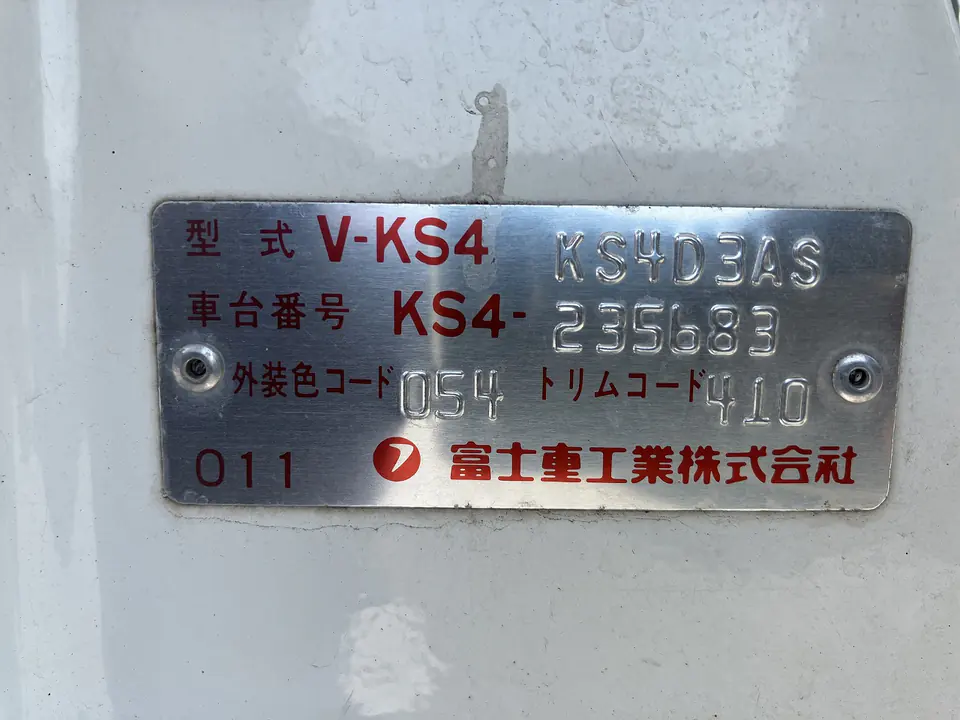
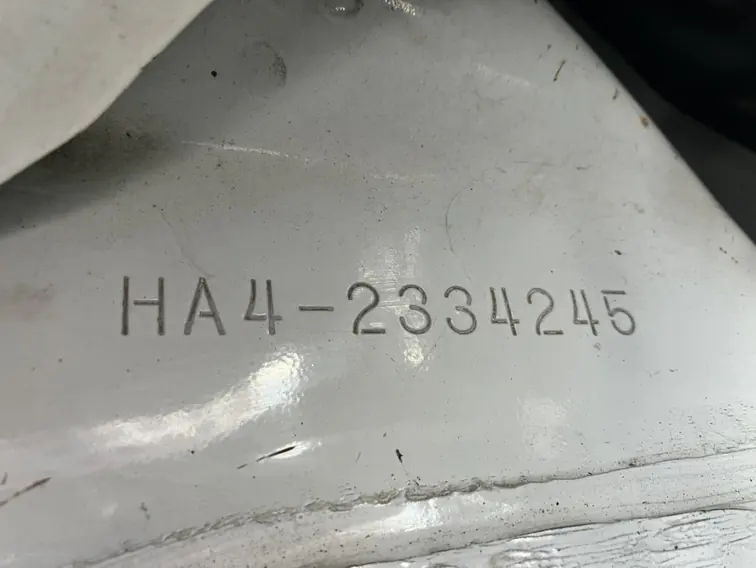
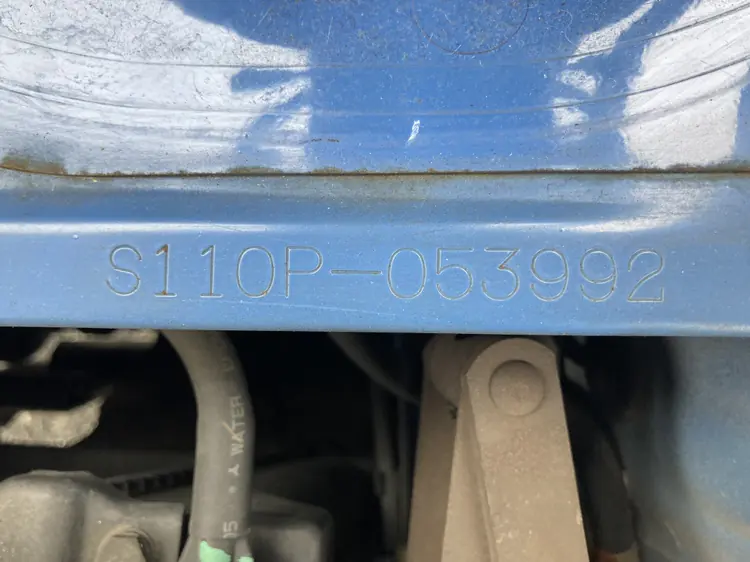
Japanese trucks don't carry a 17-character US-style VIN or a model year. They carry a chassis number, made of the model code and a serial, stamped on the frame. The build month has to be pieced together from records and from the truck itself.
- The truck. Some trucks show a build date on a plate or label in the cab or engine bay, but many don't. Date codes on seat belts and glass are useful clues, not proof.
- The chassis number. Maker production records and parts catalogs tie chassis numbers to production months. Your seller or a parts supplier can often look it up.
- The export certificate. It shows the year and month of first registration in Japan. That date comes after the build, often by weeks or months, so it works as a safe outer limit.
- The auction sheet. It usually shows the first-registration year, often as a Japanese era year. Add 1988 to a Heisei year, so H13 is 2001. Our guide to reading an auction sheet covers the other fields.
Customs officers often go by the export certificate. If your proof of the build month is weaker than the first-registration date on that certificate, plan around the later date.
Which Kei Trucks can you import in October 2026?
As of October 2026, Kei Trucks built in October 2001 or earlier are eligible. Each month, another month of production ages in.
That covers every 1990s generation from the five makers: the Honda Acty HA3/HA4, Suzuki Carry DC51T/DD51T, Daihatsu Hijet S82P/S83P and S100P/S110P, Subaru Sambar KS3/KS4 and Mitsubishi Minicab U41T/U42T. It also covers the 1999-2001 builds of the generation that came next:
- Honda Acty HA6/HA7
- Suzuki Carry DA52T/DB52T
- Daihatsu Hijet S200P/S210P
- Subaru Sambar TT1/TT2
- Mitsubishi Minicab U61T/U62T
Kei Vans from the same years follow the same rule. Each truck's generations and weak spots are on our model pages.
When will my Kei Truck turn 25?
From November 2026, one more month of 2001 and 2002 production becomes eligible each month. Find the build month in the left column. The truck can be entered from the month on the right, provided it was built early enough in its month. Count to the arrival and entry date, not the purchase date.
| Built in | Can be entered from |
|---|---|
| November 2001 | November 2026 |
| December 2001 | December 2026 |
| January 2002 | January 2027 |
| February 2002 | February 2027 |
| March 2002 | March 2027 |
| April 2002 | April 2027 |
| May 2002 | May 2027 |
| June 2002 | June 2027 |
| July 2002 | July 2027 |
| August 2002 | August 2027 |
| September 2002 | September 2027 |
| October 2002 | October 2027 |
Over the next 12 months that brings in more of the generations launched around 1999, plus more of the K6A-engined Suzuki Carry: first the DA62T, then the DA63T from 2002.
Enter your truck's build month in the checker below for a quick answer.
Is my Kei Truck old enough to import?
Use the manufacture date, not the model year or the first-registration date. If you only know the month, count from the end of that month.
What doesn't the 25-year rule do?
- It doesn't waive duty. A Kei Truck still pays 25% under tariff heading 8704.31.01, plus customs fees. The Kei Truck cost guide breaks it down.
- It doesn't register the truck. Plates are state law, and some states refuse them.
- It doesn't certify condition. An eligible truck can still be rusted through. Our buying guide covers what to inspect.
What mistakes trip up 25-year imports?
- Treating first registration as the build date. It is close, but it comes later. Use it as a safe outer limit, not a guess at the build month.
- Trusting a model year. Japan doesn't assign US-style model years. A US title often shows the first-registration year, which can differ from the build year.
- Counting to the wrong day. Eligibility is judged on the entry date. If the truck turns 25 at sea, a fast crossing can land it too early.
- Buying a young off-road import. Trucks brought in under 25 as off-road equipment were limited to 25 mph and certified only for nonroad use. Turning 25 later doesn't change the papers they came in on, and many states won't plate them.
- Swapping the engine before import. A different engine can knock the truck out of EPA code E.
For the full process, from purchase to plates, see how to import a Kei Truck.
Frequently asked questions
Is the 25-year rule based on model year or build date?
Build date. The federal exemption covers a vehicle that has reached 25 years from its date of manufacture. Japanese Kei Trucks don't carry US-style model years, so the year in a listing is usually the first-registration year. Confirm the build month from the truck, its chassis number and the export certificate before you buy.
Can my Kei Truck turn 25 while it is on the ship?
It can, but the truck has to be 25 when it is entered at the US port, so the arrival date is what counts. Crossings can run faster or slower than the schedule. Leave a few weeks of margin, or book shipping so the truck lands well after its 25-year date.
What does box 1 on the HS-7 form mean?
Box 1 on DOT form HS-7 is the age exemption set out in 49 CFR 591.5(i). Checking it tells customs and NHTSA that the vehicle has reached 25 years, so it doesn't need to meet US safety standards. Your broker files it with the entry, and many DMVs ask for a copy when you title the truck.
Do Kei Vans and Kei Cars fall under the 25-year rule too?
Yes. The exemption covers any motor vehicle that has reached 25 years, so Kei Vans and Kei Cars qualify on the same build-date basis. Their import duty can differ from a truck's, and some state laws treat them differently, so check the duty and your state's rules for the exact vehicle you want.
Will the 25-year import rule change?
It is written into federal statute at 49 USC 30112(b)(9), so changing it would take an act of Congress. Tariffs and state registration rules change far more often than the 25-year exemption does. As of October 2026, the exemption stands as written.
Can a younger Kei Truck be imported as an off-road vehicle?
Only as off-road equipment. It must be permanently limited to 25 mph and certified to nonroad emission standards, and it can't be registered for road use on that basis. If you want a truck you might put a plate on, buy one that has already passed 25 years from its build date.
Sources
- 49 U.S.C. 30112, prohibitions on importing noncompliant vehicles (Cornell LII)
- 49 CFR 591.5, declarations required for importation (eCFR)
- EPA Form 3520-1, importation of motor vehicles and engines (August 2024)
- CBP, Section 232 additional FAQs on automobiles and auto parts
- CBP, Importing a Motor Vehicle
- Pennsylvania DMV, Mini Trucks frequently asked questions
This page explains the rules in plain English. It is not legal advice. Laws change and offices apply them differently, so confirm with your state DMV or county titling office before you buy or register a truck.