
On this page
Key facts
- Timing belt (common guidance)
- Every 100,000 km (about 62,000 mi) or 10 years
- Engine oil and filter
- Every 3,000-5,000 mi (5,000-8,000 km) or 6 months
- Brake fluid and coolant
- Every 2 years
- Fuel
- Regular unleaded, E10 or ethanol-free; EPA bars E15 in model year 2000 and older vehicles
- Tire age
- Check the date code; many automakers advise replacement at about 6 years
- Final authority
- The owner's or service manual for your chassis code
A Kei Truck is easy to keep running once it is caught up. The catch is that most arrive with no service history you can trust and with rubber and fluids of unknown age. This page gives a schedule built from common guidance for 1990-2001 trucks, the jobs to do first, and what changes from engine to engine. Where the factory service manual for your chassis says something different, follow the manual.
What should you service first on a newly bought Kei Truck?
Assume nothing has been done: in the first week, replace the timing belt and water pump unless you hold a dated receipt, then renew every fluid, filter and spark plug. Japanese service records rarely travel with an exported truck, and a belt of unknown age is the most expensive gamble on the truck. Work through these steps before long drives or heavy loads.
Find the chassis and engine codes
Read the ID plate and note the chassis code, such as DD51T or HA4, and the engine code. Order every part by these codes, not by model year.
Replace the timing belt and water pump
Unless you hold a dated receipt, replace the belt, tensioner and water pump together, plus the camshaft and crankshaft seals if they show oil.
Change the engine oil and filter
Drain the oil, fit a new filter and drain plug washer, and refill with the grade and viscosity your manual lists for your climate.
Refresh the cooling system
Drain and refill the coolant, and replace soft or cracked hoses, the radiator cap and the thermostat if their age is unknown.
Change the gear oils
Replace the oil in the transmission, in the transfer case on 4WD trucks, and in the differentials.
Flush the brake fluid and inspect the brakes
Flush the old fluid with the grade on the reservoir cap, then check the pads, rear shoes, hoses and parking brake.
Renew filters and ignition parts
Fit new air and fuel filters and spark plugs. On distributor engines, replace a worn cap, rotor and plug wires too.
Check the battery, belts and tires
Test the battery and charging output, inspect the drive belts, and replace tires that are cracked or too old to trust.
Almost all of it is hand-tool work. Order parts by the chassis code on the ID plate (for example DD51T, HA4 or S110P) rather than by model year, because one model name covers several generations with different parts. If you are still shopping, the Kei Truck buying guide covers what to inspect before money changes hands.
What is the Kei Truck maintenance schedule?
The intervals below are common guidance for 1990-2001 Kei Trucks, in miles and kilometers, and the manual for your engine takes priority. Use the short end of each range for what manuals call severe service: short trips, dust, long idling, heavy loads and farm work. That describes most Kei Truck lives.
| Service | Common interval | Notes |
|---|---|---|
| Engine oil and filter | 3,000-5,000 mi (5,000-8,000 km) or 6 months | The sump is small, so the oil works hard. Fit a new oil filter every time. |
| Air filter | Inspect at every oil change; replace about every 15,000 mi (24,000 km) | Far sooner on dusty farm roads. See air filters. |
| Fuel filter | On arrival, then about every 30,000 mi (50,000 km) | Sooner if the tank shows rust or sediment. See fuel filters. |
| Spark plugs | Standard plugs about every 4,500-6,000 mi (7,000-10,000 km) | Japanese guidance puts small Kei engines at roughly half a full-size car's interval. Long-life plugs follow the plug maker's rating. A tune-up kit covers plugs and ignition parts together. |
| Valve clearance | Your manual's interval, and at the latest during each timing belt job | Applies to engines with screw-type adjusters. A steady tick from the top of the engine is the warning. |
| Timing belt, tensioner and water pump | 100,000 km (about 62,000 mi) or 10 years | Do it on arrival if there is no receipt. |
| Coolant | Every 2 years | Check the hoses, radiator cap and thermostat at the same time. |
| Transmission, transfer case and differential oil | About every 25,000 mi (40,000 km) or 2 years | Sooner after deep water or mud. |
| Brake fluid | Every 2 years | Use the grade printed on the reservoir cap. |
| Constant velocity (CV) joint boots, 4WD front axle | Inspect at every oil change | Replace a torn CV boot before grit reaches the joint. |
| Clutch | Check pedal free play at every oil change | Cable clutches need periodic adjustment; hydraulic ones need fluid checks. |
| Carburetor, if fitted | Check idle, choke and linkage every 6 months | Clean it after any long storage. |
| Drive belts | Inspect at every oil change | Replace when cracked, glazed or squealing. |
| Tires | Check the date code once a year | Replace by age as well as tread. |
Tires deserve a closer look. On US-market tires, the Department of Transportation (DOT) code ends in a four-digit date, two digits for the week and two for the year, so 2219 means the 22nd week of 2019 (49 CFR 574.5). Tires that arrive on an imported truck often carry no DOT code at all. Many vehicle makers advise replacing tires about six years after manufacture, and tire makers commonly treat ten years as the limit.
These are typical intervals for old trucks with unknown history, not factory figures for a specific engine. Japanese manuals list intervals in kilometers, and the manual for your chassis code is the authority.
When should you change a Kei Truck timing belt?
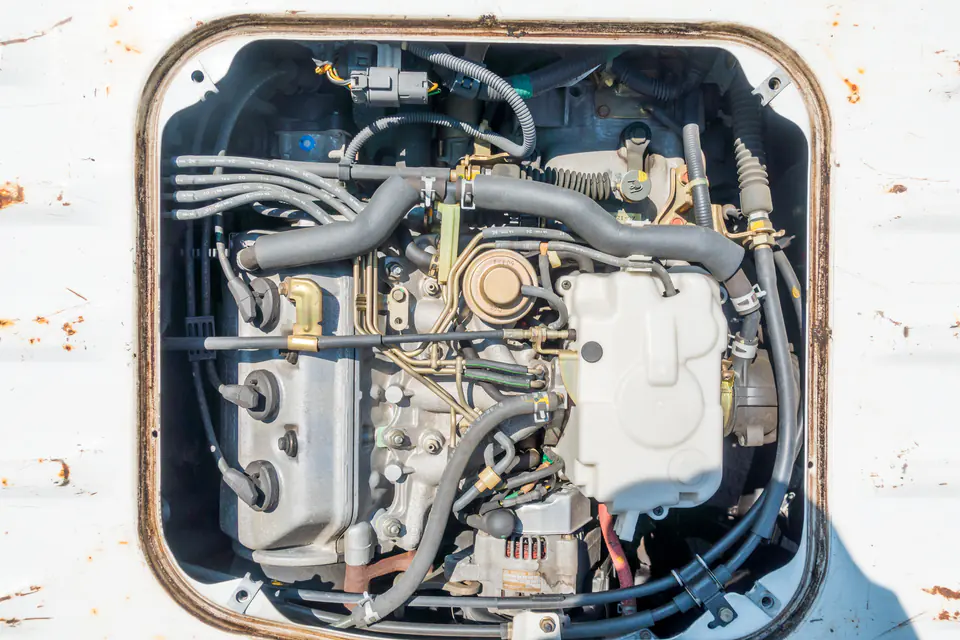
Common Japanese guidance is every 100,000 km (about 62,000 miles) or 10 years, whichever comes first, and right away on any truck without a dated receipt. Nearly every engine in the importable 1990-2001 trucks uses a rubber timing belt: Suzuki's F6A, Honda's E07A and E07Z, Daihatsu's EF series, Subaru's EN07 and Mitsubishi's 3G83. Suzuki's K6A, which replaced the F6A in later Carrys and is just reaching the 25-year line, uses a timing chain instead.
A broken belt stops the engine on the spot. On an interference engine, the pistons can also hit open valves and bend them, which turns a belt job into a cylinder head repair. Owners and parts sellers disagree about which Kei engines are interference designs, and we could not confirm any of them from a factory document. Plan as if a snapped belt will damage yours.
Do the whole job once:
- Replace the belt, the tensioner and any idler pulley together.
- Swap the water pump at the same time, since most of the labor overlaps.
- Replace the camshaft and crankshaft oil seals if they show any oil, because oil degrades a new belt.
- Refill with fresh coolant, since the system is partly drained anyway.
Timing belt kits group these parts by chassis code. Write the date and odometer reading on a tag and zip-tie it in the engine bay, so the next person working on the truck knows where it stands.
What should you know about each Kei Truck engine?
Five engine families power nearly every importable Kei Truck, and each has habits worth knowing before you pick up a wrench. Full output and dimension figures are on the Kei Truck specs page.
| Engine | Found in | What to watch |
|---|---|---|
| Suzuki F6A, 657 cc three-cylinder | Suzuki Carry and the rebadged Mazda Scrum | Carbureted and fuel-injected versions exist. Distributor engines need a healthy cap, rotor and plug wires. |
| Honda E07A (1990s) and E07Z (1999 on), 656 cc three-cylinder | Honda Acty | The engine sits under the bed ahead of the rear axle, so access is tight. Most 1990s trucks are carbureted; the E07Z is fuel injected. |
| Daihatsu EF series, 659 cc three-cylinder | Daihatsu Hijet | The engine sits under the seats, so heat and cooling health matter. Check charging output before adding accessories. |
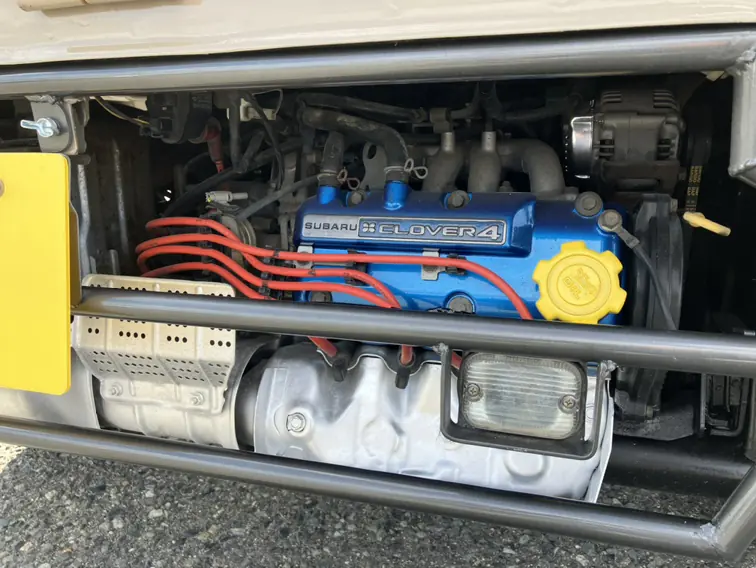
| Subaru EN07, 658 cc four-cylinder | Subaru Sambar | Rear-mounted. Watch for oil weeping from aging seals. Supercharged versions add a separate supercharger drive belt. |
| Mitsubishi 3G83, 657 cc three-cylinder | Mitsubishi Minicab | If the idle hunts on an injected engine, owners usually start with the idle-control valve and the vacuum hoses. |
Whatever the engine, overheating is the failure that turns cheap ownership expensive. Keep chaff and mud out of the radiator fins, replace soft or swollen hoses, and watch the gauge when the truck works hard on a hot day. Radiator parts such as caps, hoses and thermostats cost little next to a warped cylinder head. Before you add lights or a winch, have the charging system tested, and replace tired alternators and belts first.
How do you care for a carbureted Kei Truck versus a fuel-injected one?
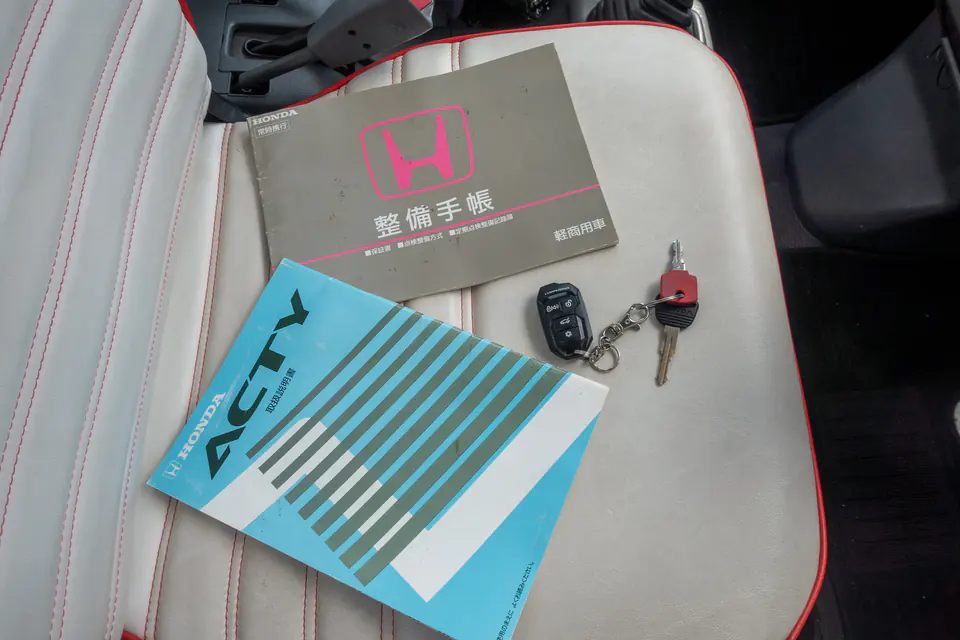
Check which one you have before ordering parts: many 1990s trucks are carbureted, and Suzuki's January 1999 Carry specification still listed a carbureted base engine beside fuel-injected versions. The engine code and the service manual will tell you.
Fuel matters for both. The Environmental Protection Agency (EPA) does not allow E15 gasoline in model year 2000 and older cars and light trucks, which covers most importable Kei Trucks. Use regular unleaded with no more than 10% ethanol, or ethanol-free fuel for a truck that sits for long periods.
For carbureted trucks:
- Add fuel stabilizer before any break longer than a few weeks.
- Check that the choke gives a fast idle when cold and releases fully once warm.
- Replace cracked rubber fuel and vacuum lines, which leak air and fuel with age.
- Rebuild a gummed-up carburetor with fresh gaskets, needle and seat rather than replacing it. Carburetor parts are listed by chassis.
For fuel-injected trucks:
- Keep the fuel filter on schedule, because injectors need clean fuel at steady pressure.
- If the idle wanders, clean the throttle body and idle-control passages and check the vacuum hoses before replacing sensors.
- Keep the battery terminals and ground straps clean and tight, since low voltage upsets electronic injection.
How do you keep a Kei Truck from rusting?
Rust is the one problem that can end a Kei Truck's working life, so rinse the underside after every drive on salted roads and inspect the frame at least twice a year. Look hardest at the frame rails, the cab corners and the floor under the mats, the rocker panels, the wheel arches, the bed floor and its seams, and the points where the bed bolts to the frame.
Prevention that works:
- Rinse the underbody all winter, including inside the frame rails where you can reach.
- Before winter, apply an oil- or wax-based rust inhibitor to the frame, seams and cavities. Hard rubberized coatings can trap water once they crack, so inspect them every year.
- Keep the drain holes in the doors, cab floor and bed clear.
- Lift the floor mats after wet days so the floor can dry.
- Touch up chips in the bed and cab paint before they spread.
Once a panel has rotted through, replacing it with a new exterior body part beats patching the same spot every year.
How should you store a Kei Truck for the off-season?
For storage longer than a month, stabilize the fuel, keep the battery charged, and protect the truck from moisture and rodents.
- Fill the tank with fresh fuel plus stabilizer, then run the engine long enough to draw the treated fuel through the lines.
- Connect a battery maintainer, or disconnect the negative cable. If the battery is old, a new battery costs less than a spring tow.
- Inflate the tires to the pressure on the tire label and move the truck a few feet every few weeks.
- Chock the wheels and leave the parking brake off, so the rear drum shoes cannot stick to the drums.
- Block the air intake and exhaust openings against mice, and leave a note on the steering wheel to remove the covers.
- Before the first drive, check every fluid and the brakes, and look inside the air filter box for nests.
Can you do Kei Truck maintenance yourself?
Yes: most jobs need only metric hand tools, a JIS screwdriver set, a jack with stands and the service manual for your chassis. Japanese Industrial Standard (JIS) cross-head screws look like Phillips screws, but a Phillips driver tends to cam out and strip them, while a JIS driver fits properly.
Expect tight access. The engine sits under the seats on most models, under the bed on the Acty and at the rear on the Sambar, so a first timing belt job takes patience. Plan a full weekend or hand that one job to a shop. Air conditioning is a special case for paid work: anyone who services vehicle air conditioning for payment must be certified under Section 609 of the Clean Air Act (EPA).
Keep a log of dates, odometer readings and parts. It keeps you on schedule and it helps when you sell. Once the truck is sorted, the Kei Truck mods guide covers sensible upgrades, and the off-road guide covers 4WD, tires and recovery.
Find parts for your truck
Pick your model and chassis code. We'll send you to the right Oiwa Garage collection.
Frequently asked questions
How often should you change the oil in a Kei Truck?
Common guidance for these small engines is every 3,000-5,000 miles (5,000-8,000 km) or six months, whichever comes first, with a new filter each time. Use the short end for short trips, dusty roads, heavy loads and farm work, which describes most Kei Truck use. Choose the oil grade and viscosity your owner's manual lists for your climate.
What happens if a Kei Truck timing belt breaks?
The engine stops at once and will not restart until the belt is replaced. On an interference engine, the pistons can also strike open valves and bend them, which turns a belt job into a cylinder head repair. Sources disagree about which Kei engines are interference designs, so replace the belt on schedule rather than finding out the hard way.
Can you use E15 gasoline in a Kei Truck?
Not in most of them. The EPA does not allow E15 in model year 2000 and older cars and light trucks, and that covers most Kei Trucks you can import today. Use regular unleaded with no more than 10% ethanol, or ethanol-free fuel, especially in carbureted trucks that sit unused for weeks at a time.
What brake fluid does a Kei Truck use?
Use the grade printed on the reservoir cap or listed in the manual, which on these trucks is a glycol-based fluid. Federal standards define DOT 3, DOT 4 and DOT 5 grades, and DOT 5 fluid can be silicone based. Never mix silicone fluid into a glycol system, and flush the fluid every two years because it absorbs water.
Where do I find the maintenance schedule for my exact Kei Truck?
In the owner's manual or factory service manual for your chassis code, which is on the truck's ID plate. Japanese manuals list intervals in kilometers, so convert carefully: 100,000 km is about 62,000 miles. Oiwa Garage carries factory service manuals, wiring diagrams and parts catalogs for many 1990s Kei Truck chassis.
How old can Kei Truck tires be before you replace them?
Many vehicle makers advise replacing tires about six years after manufacture, and tire makers commonly treat ten years as the limit, whatever the tread looks like. On US tires, the last four digits of the DOT code give the week and year of manufacture. If the tires on an imported truck show no readable date, plan to replace them.