On this page
Key facts
- Maker
- Subaru (Fuji Heavy Industries until 2017); Daihatsu has built the Sambar Truck since 2012
- Years sold in Japan
- 1961 to today (Subaru-built until February 2012)
- US-importable now (as of Oct 2026)
- Trucks built October 2001 or earlier: all KS3/KS4, early TT1/TT2 and older 550 cc trucks
- Chassis codes
- KS3/KS4 (1990-1999), TT1/TT2 (1999-2012), then Daihatsu-built S201J/S211J (2012-2014) and S500J/S510J (2014 on)
- Engine(s)
- EN07 658 cc 4-cylinder SOHC with timing belt: carbureted, fuel injected or supercharged (1990-2012); Daihatsu KF 3-cylinder after 2012
- Layout and drive
- Rear engine; rear-wheel drive or 4WD; independent suspension at all four wheels
- 4WD system
- KS4: part-time or viscous-coupling full-time 4WD, EL crawler gear on 5-speeds; TT2: selectable 4WD on manuals, full-time on automatics
- Rated load (Japan)
- 350 kg (about 770 lb)
- Rebadged as
- None; since April 2012 the Sambar Truck has itself been a rebadged Daihatsu Hijet
The Subaru Sambar breaks the usual Kei Truck pattern: four cylinders instead of three, the engine at the back, and independent suspension at every wheel. Here is which Sambars you can import, what the supercharged and automatic versions mean for a buyer, and what to check.
What is the Subaru Sambar?
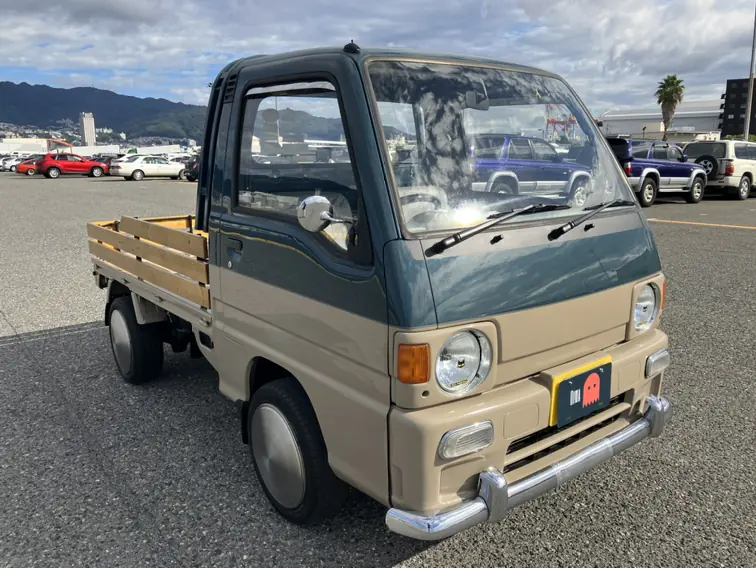
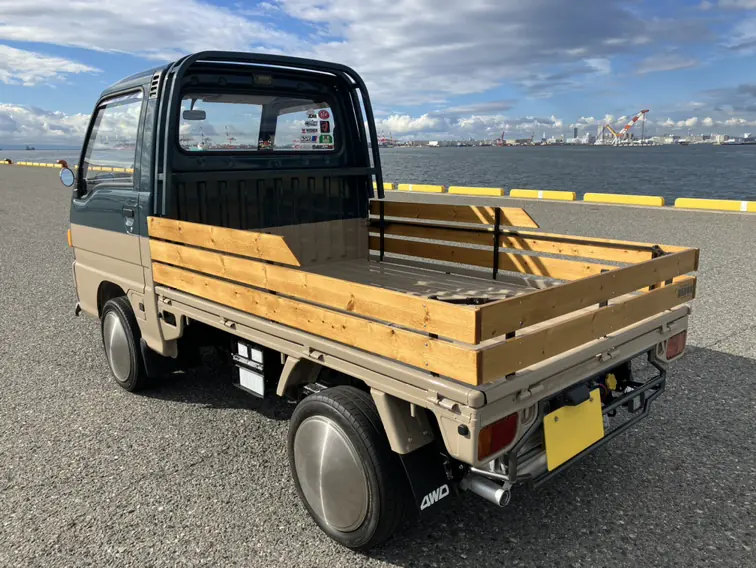
The Subaru Sambar is a two-seat Kei Truck that Subaru built itself from 1961 until February 2012. The engine sits at the back of the truck and drives the rear wheels or all four. Subaru gave it independent suspension at every corner, with MacPherson struts in front and semi-trailing arms at the rear on the 1990s trucks. The bed is rated for 350 kg (about 770 lb) under Japan's Kei class, the small-vehicle category that caps engines at 660 cc.
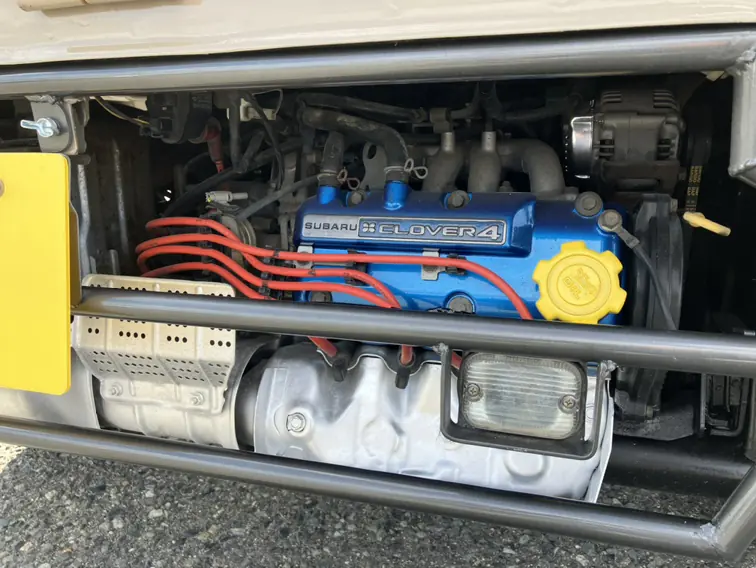
From 1990 Subaru used its own EN07, a 658 cc four-cylinder with a single overhead camshaft, where its main rivals used three-cylinder engines. Four small cylinders run smoother than three, though the EN07 makes its power higher in the rev range. Subaru offered it carbureted at 40 PS (metric horsepower, about 39 hp), fuel injected at 46-48 PS, and supercharged at 55 PS, rising to 58 PS from 1999.
The Sambar Dias
Dias is Subaru's name for the passenger-trim Sambar vans: the Dias van on the KV3/KV4 and TV1/TV2 bodies, and the Dias Wagon (TW1/TW2) from 1999. They share the truck's rear-mounted EN07, and the supercharged engine was offered in the Dias Wagon. Owners can find Sambar Dias Wagon parts, and the Kei Van guide covers what to check on the van bodies.
Sambars after 2012
Since April 2012 the Sambar Truck has been a Daihatsu Hijet with a Subaru badge, first as the S201J/S211J and from September 2014 as the S500J/S510J. They have nothing in common with the rear-engine Subaru design and are years away from import eligibility.
Which Subaru Sambar generations can you import?
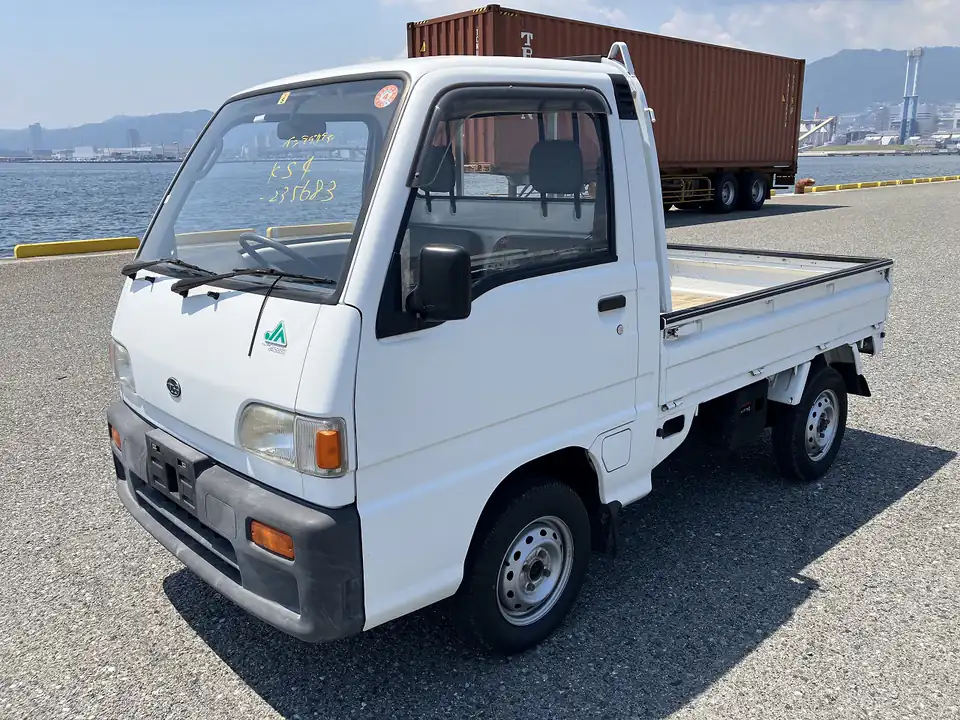
As of October 2026, any Sambar manufactured in October 2001 or earlier can enter the US under the 25-year rule, the federal exemption from US safety standards for vehicles at least 25 years old. The date that counts is the month the truck was built. The 25-year rule guide explains how to confirm it.
| Generation | Years | Chassis codes | Engine | Notes | US-importable (Oct 2026)? |
|---|---|---|---|---|---|
| Before 1990 | 1961-1990 | Earlier codes | 360 cc, then 550 cc | Collector territory | Yes |
| 5th gen | Mar 1990-Feb 1999 | KS3 (2WD), KS4 (4WD) | EN07 658 cc 4-cylinder: carbureted 40 PS, fuel injected 46-48 PS, supercharged 55 PS | ECVT automatic until Oct 1995, then a 3-speed automatic; EL 5-speed on 4WD | Yes, all |
| 6th gen | Feb 1999-Feb 2012 | TT1 (2WD), TT2 (4WD) | EN07: fuel injected 46-48 PS, supercharged 58 PS | Last Subaru-built Sambar; larger body | Builds through Oct 2001 |
| 7th gen | Apr 2012-Sept 2014 | S201J (2WD), S211J (4WD) | Daihatsu KF 3-cylinder | Rebadged Hijet | From Apr 2037 |
| 8th gen | Sept 2014-today | S500J (2WD), S510J (4WD) | Daihatsu KF | Rebadged Hijet | From Sept 2039 |
The KS3 and KS4 offer the widest spread of hardware: carbureted or injected engines, a supercharged option, the ECVT or a 3-speed automatic, and two kinds of 4WD. The TT1 and TT2 arrived in February 1999 with a larger body built to the Kei size rules Japan adopted in October 1998. Naturally aspirated output rose to 48 PS when Subaru moved to multipoint injection in August 2001.
Check your state's rules in the state-by-state Kei Truck laws before you shop, and see how to import a Kei Truck for the paperwork.
Should you buy a supercharged or automatic Sambar?
Subaru's supercharged EN07 makes 55 PS in 1990s form and 58 PS from 1999, against 40-48 PS for the naturally aspirated engines. The extra power shows on hills, on-ramps and faster back roads, and many enthusiasts seek these trucks out.
The trade-offs are real. The supercharger is belt-driven and adds parts to maintain, supercharged trucks are uncommon, and they usually cost more. Buy one with service records, and listen for whine or rattle from the blower on the test drive.
Automatic Sambars built from 1990 to October 1995 use Subaru's ECVT, a continuously variable transmission. Subaru replaced it with a conventional 3-speed automatic in October 1995 because the ECVT did not stand up well to commercial use, and parts and know-how for it can be hard to find in the US. Treat an ECVT truck as a project unless the price reflects that risk. Later automatics are ordinary 3-speeds, and on the TT2 the automatic comes with full-time 4WD, while manual TT2 trucks have selectable 4WD.
What should you check before buying a Subaru Sambar?
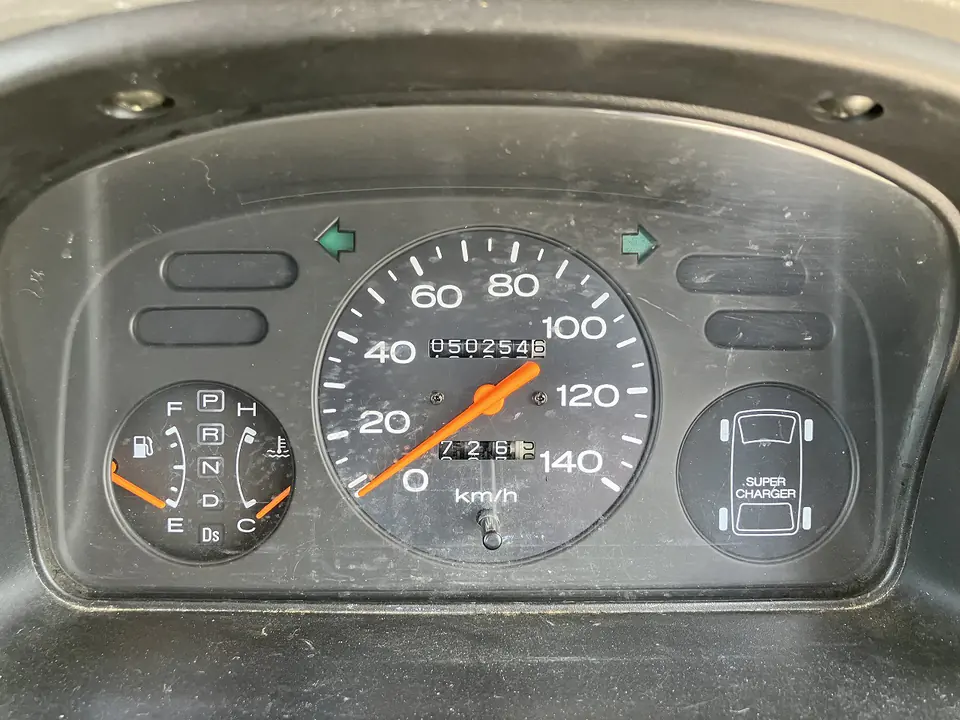
Check the chassis code, build month and transmission first. Together they decide whether the truck clears the October 2001 cutoff, which 4WD system it has, and whether it carries the ECVT. Then inspect the truck:
- Cooling system. With the engine at the back and the cab at the front, coolant pipes and hoses run along the underside. Look for leaks and corrosion along them, check the coolant, and watch the temperature gauge on a long drive.
- Oil leaks at the back. Valve cover gaskets and cam and crank seals weep with age. Light seepage is normal at this age; fresh drips under the truck are not.
- Supercharger. On supercharged trucks, ask for service records, check the drive belt, and listen for whine or rattle.
- Transmission and 4WD. Confirm whether an automatic is an ECVT. On KS4 5-speeds, look for the EL crawler gear. On TT2 manuals, check that 4WD engages and releases cleanly.
- Suspension and CV boots. Independent suspension means more bushings and joints. Look for uneven tire wear, and check the CV boots on the rear axle shafts of every Sambar and at the front on 4WD trucks.
- Rust. Check the rocker seams, floor pans, rear wheel arches and bed seams.
- Timing belt history. Ask for a dated record of the last belt change.
Read the auction sheet guide before you bid, and bring the checklist from the Kei Truck buying guide to any truck you can see in person.
What are common Subaru Sambar problems?
At 25-plus years the EN07 is still durable, but the rear-engine layout brings its own list of age-related jobs.
Cooling and overheating
Overheating is the expensive failure on a rear-engine truck. Replace soft or cracked hoses, keep the coolant fresh, check the radiator cap and fan, and bleed air out carefully after any cooling work, since long coolant runs trap air. Start with Kei Truck radiator parts if the radiator or its hoses are tired.
Oil weeps
Gaskets and seals on a 25-year-old EN07 weep. A valve cover gasket is a simple fix. Crank and camshaft seals take more labor to reach with the engine tucked under the back of the bed, so factor that into your offer.
Timing belt
The EN07 drives its camshaft with a rubber belt. A common rule of thumb is a new belt every 100,000 km (about 62,000 miles) or 10 years. Treat an undocumented belt as due, and change the tensioner and seals with it.
CV boots
Every Sambar drives its rear wheels through CV-jointed shafts, and 4WD trucks add a pair at the front. Torn CV boots are a common find and cheap to fix early.
Carbureted early trucks
Early KS3 and KS4 trucks with the carbureted EN07C start hard and idle rough after sitting. A carburetor clean or rebuild, fresh plugs and new fuel hoses usually bring them back.
ECVT faults
If an ECVT truck slips, flares or shudders, assume the transmission is near the end of its life and adjust your offer.
Rust
Rocker seams and floors usually go first. Wash the underside after salted roads and treat chips early. Intervals and storage tips are in the maintenance guide.
Where do you get Subaru Sambar parts?
Order Sambar parts by chassis code (KS4, TT2 and so on). A KS4 and a TT2 share the EN07 family, but bodies, brakes and suspension parts changed with the 1999 redesign.
Oiwa Garage, the parts store that publishes this guide, sorts Sambar parts by chassis:
- KS3 and KS4 parts for 1990-1999 trucks
- TT1 and TT2 parts for 1999-2012 trucks
For the first service on a newly imported truck, plan on oil and filter, air and fuel filters, four spark plugs, coolant, gear oil and the timing belt.
How does the Sambar compare with other Kei Trucks?
The Sambar is the odd one out. It has a rear engine, four cylinders and independent suspension at every wheel, while the Suzuki Carry, Daihatsu Hijet and Mitsubishi Minicab put the engine under the seats over a leaf-sprung rear axle. The Honda Acty is the closest in spirit, with its engine behind the cab between the axles.
Pick a Sambar for the smooth four-cylinder and the ride, or a supercharged one for extra pace. Pick a Carry or Hijet if you want the most conventional layout to work on. The Kei Truck model comparison lines up all five.
Find parts for your truck
Pick your model and chassis code. We'll send you to the right Oiwa Garage collection.
Frequently asked questions
Why does the Subaru Sambar have a four-cylinder engine?
Subaru built the Sambar around its own EN07, a 658 cc four-cylinder, rather than the three-cylinder layout its main rivals used. Four small cylinders run smoother than three, so the Sambar feels less buzzy, though it makes its power higher in the rev range. Subaru used the EN07 in Sambars from 1990 until it stopped building them in 2012.
Should I avoid a Subaru Sambar with an automatic?
Avoid the 1990-1995 ECVT unless the price reflects the risk. Subaru replaced that continuously variable transmission with a conventional 3-speed automatic in October 1995 because the ECVT did not hold up well in commercial use, and US support for it is thin. Later 3-speed automatics are fine for flat, low-speed work, and on the TT2 they come with full-time 4WD.
Is a 2014 Subaru Sambar a real Sambar?
Not in the rear-engine sense. Subaru stopped building its own Sambar in February 2012, and since April 2012 the Sambar Truck has been a Daihatsu Hijet with a Subaru badge and a three-cylinder engine under the seats. These trucks are also far too new to import under the 25-year rule; the first ones turn 25 in 2037.
Which Subaru Sambar trucks can be imported in 2026?
As of October 2026, any Sambar manufactured in October 2001 or earlier qualifies under the 25-year rule. That includes every KS3 and KS4 built from 1990 to 1999, older 550 cc and 360 cc trucks, and TT1 and TT2 trucks built from February 1999 through October 2001. Later TT trucks become eligible month by month until the last ones in 2037.
Does the Subaru Sambar have independent suspension?
Yes. Unlike the leaf-sprung rear axles on the Carry, Hijet and Minicab, the Subaru-built Sambar uses independent suspension at all four wheels, with MacPherson struts in front and semi-trailing arms at the rear on the 1990s trucks. It helps the ride, but it means more bushings and CV joints to inspect.
What is a Subaru Sambar Dias?
Dias is Subaru's name for the passenger-trim Sambar vans: the Dias van of the 1990s and the Dias Wagon, sold from 1999 under the TW1 and TW2 codes. They use the same rear-mounted EN07 four-cylinder as the truck, and the supercharged engine was offered in the Dias Wagon. Dias models built in October 2001 or earlier can be imported under the 25-year rule.
Sources
- 49 U.S.C. 30112: Prohibitions on noncomplying motor vehicles, including the 25-year exception in (b)(9) (Cornell LII)
- 49 CFR 591.5: Declarations required for importation, including the 25-year declaration in (i) (Cornell LII)
- U.S. Customs and Border Protection: Importing a Motor Vehicle
- r/KeiTruckBuilds owner community